
Great Blue Heron
Ardea herodias
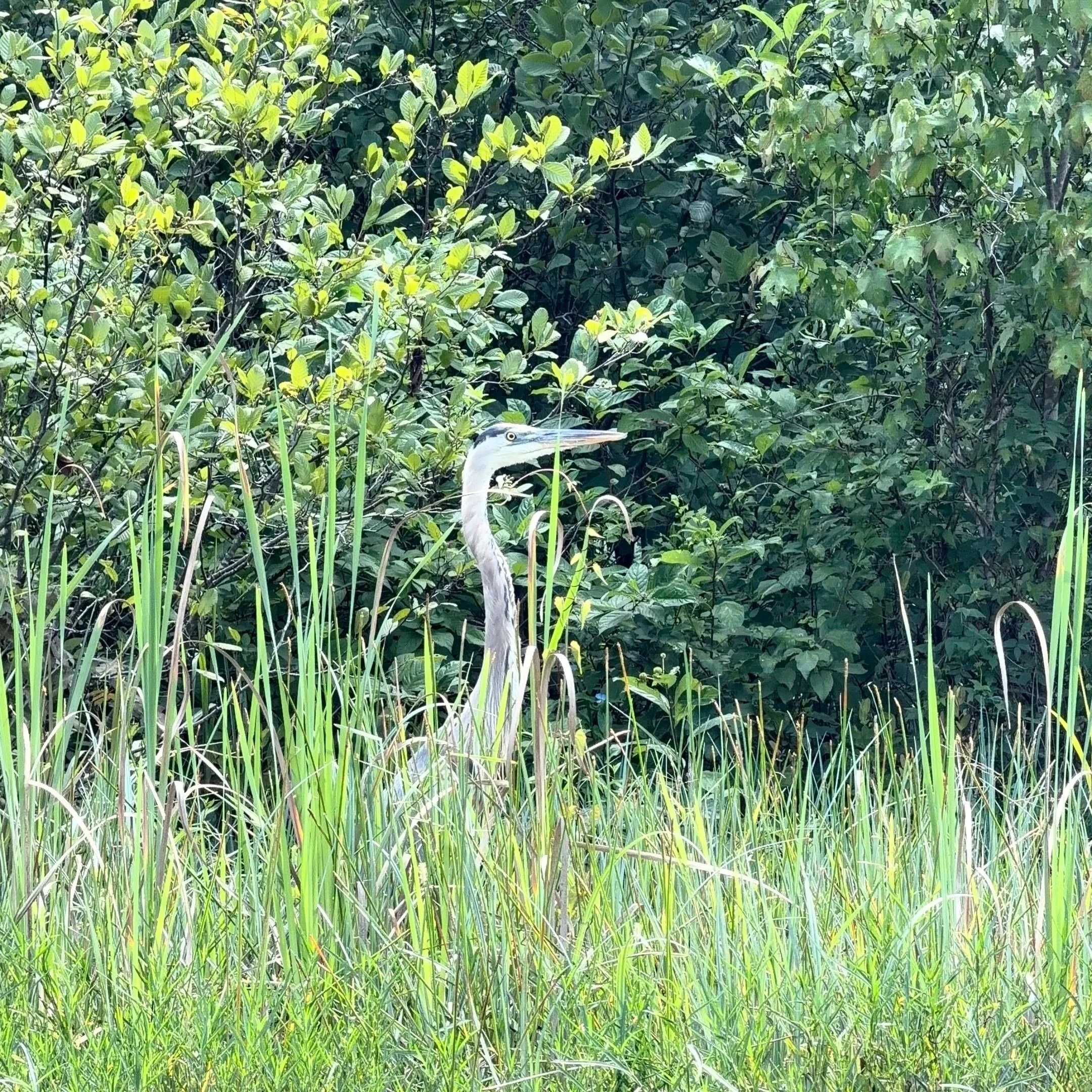
Category: Birds
Habitat: Lakes, rivers, marshes, wetlands, and shallow coves
Best time to spot: Early morning and late afternoon
Status in Georgia: Common year-round resident
Photo taken by Amanda Mileham
Lake Acworth, Acworth Georgia. July 4, 2026.
How to Identify
The Great Blue Heron is one of the largest and most recognizable birds found along Georgia’s waterways.
Look for a tall, blue-gray bird with long legs, a long neck, and a thick, dagger-shaped bill. Adults have a white face, a dark stripe above the eye, and long feathers extending from the back of the head.
When standing, a Great Blue Heron may stretch its neck upward or fold it close to its body. In flight, it pulls its neck into a deep S shape while its long legs trail behind it.
Where You May See One
Great Blue Herons are often found near shallow water where fish, frogs, and other small animals are plentiful.
Paddle Club members may spot them along:
Lake Acworth
Carters Lake
High Falls State Park
George L. Smith State Park
The Okefenokee National Wildlife Refuge
Watch quiet shorelines, marshy areas, partially submerged logs, and the edges of shallow coves.
Behavior
Great Blue Herons are patient hunters. They often stand almost completely still while watching the water, then quickly strike with their bill when prey comes within reach.
They may also walk slowly through the shallows or use their feet to disturb fish hiding beneath the water.
Although they appear calm, herons are easily startled. A bird that suddenly stretches its neck, begins calling, or repeatedly flies farther down the shoreline may be uncomfortable with your presence.
What They Eat
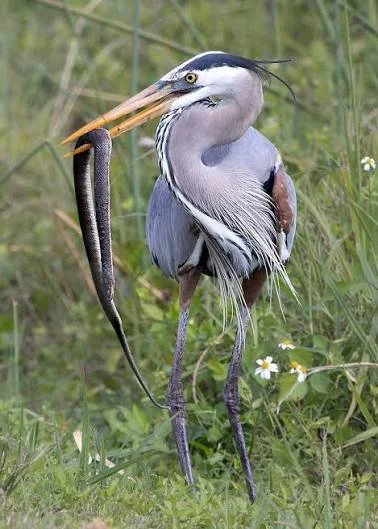
Great Blue Herons primarily eat fish, but they are opportunistic hunters and may also feed on:
Frogs
Crayfish
Snakes
Small turtles
Aquatic insects
Rodents and other small animals
Their varied diet allows them to live around freshwater wetlands, rivers, lakes, and even coastal environments.
Link to original photographer embedded in image
What to Listen For
The Great Blue Heron does not have a soft or musical song. Its call is usually a loud, rough croak that may be heard when the bird is startled or flying away.
Sometimes you will hear the call before you notice the heron lifting away from the shoreline.
Field Notes
A Great Blue Heron flying overhead can appear prehistoric, especially when seen through the mist of an early morning paddle.
Herons frequently return to the same feeding areas, so make a note of where you spot one. You may find the same bird standing near that shoreline during a future visit.
Paddle Respectfully
Slow your paddle strokes as you approach and allow the heron plenty of space.
Avoid paddling directly toward the bird or following it each time it moves farther down the shoreline. Remaining quiet and still often gives you a better opportunity to observe natural behavior.
Never approach nests or large groups of nesting herons. Nesting colonies are especially sensitive to disturbance.
Quick Identification
Size: Very large wading bird
Color: Blue-gray body with a white face and dark eye stripe
Bill: Long, thick, and yellowish
Legs: Extremely long and dark
In flight: Neck folded into an S shape with legs trailing behind
Commonly confused with: Great Egret, Little Blue Heron, and Sandhill Crane
Did You Know?
Great Blue Herons have specialized neck vertebrae that allow them to rapidly extend their neck when striking at prey. Their slow, patient hunting style can change into an incredibly fast movement in an instant.
Have You Spotted One?
Record where and when you saw the heron, along with what it was doing. Photographs showing the bird’s body shape, bill, legs, and surrounding habitat can help confirm an identification.
Submit your sighting to the Driftwood Paddle Club Field Guide.
