
Red-Winged Blackbird
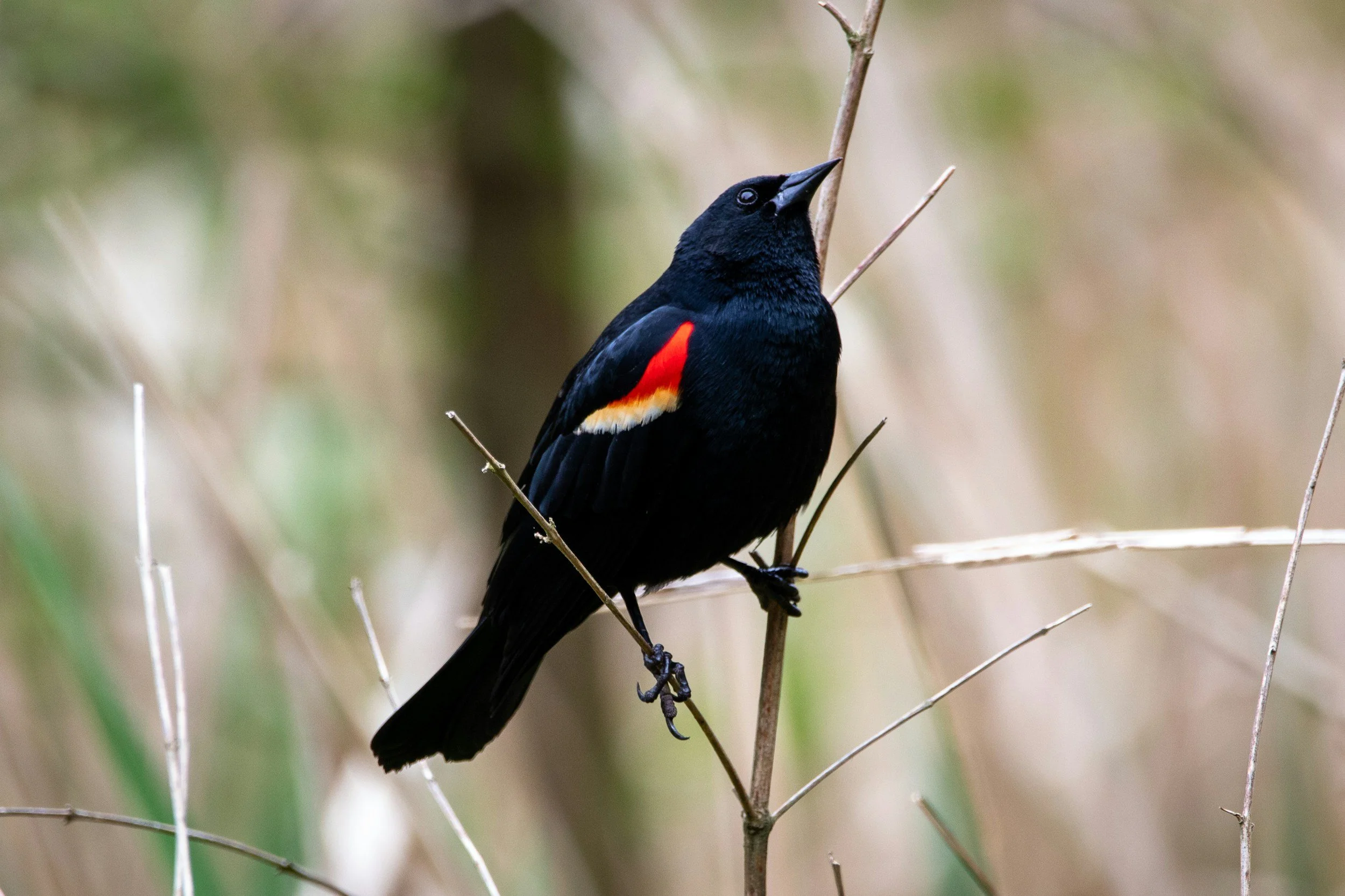
Agelaius phoeniceus
Category: Birds
Habitat: Marshes, wetlands, pond edges, wet fields, and grassy shorelines
Best time to spot: Morning and early evening
Status: Common throughout much of North America
How to Identify
Male and female Red-winged Blackbirds look surprisingly different.
Adult males are glossy black with bright red shoulder patches edged in yellow. These colorful patches are sometimes called epaulets. A male may display them prominently while singing or partially hide them beneath his black feathers.
Females are brown with heavy streaking across the chest and back. At first glance, they can resemble a large sparrow. Look for their pointed bill, pale eyebrow stripe, and stocky blackbird shape.
Where You May See One
Red-winged Blackbirds are closely associated with wetlands and areas containing tall grasses, reeds, cattails, or other dense shoreline vegetation.
Paddle Club members are most likely to notice them around:
Lake Acworth
High Falls State Park
George L. Smith State Park
The Okefenokee National Wildlife Refuge
Marshy coves and wet fields throughout Georgia
Males are often easy to spot because they perch near the tops of cattails, shrubs, fence posts, or exposed branches. Females usually remain lower and more hidden within the vegetation.
Behavior
Male Red-winged Blackbirds are bold and highly visible during the breeding season. They sing from exposed perches while spreading their wings and raising their bright shoulder feathers.
Females spend more time moving quietly through reeds and grasses as they search for food, gather nesting materials, and care for their young.
Both males and females may aggressively defend a nesting area. They have been known to chase much larger birds, including hawks and crows, that pass too close to their territory.
What They Eat
Red-winged Blackbirds eat a varied diet that changes throughout the year.
During warmer months, they feed heavily on:
Insects
Caterpillars
Beetles
Spiders
Other small invertebrates
During fall and winter, they consume more seeds and grains. They may gather in large mixed flocks with grackles, cowbirds, and starlings while feeding in fields and pastures.
What to Listen For
You may hear a Red-winged Blackbird before you see one.
The male’s song is a loud, rising call commonly written as “conk-la-ree!” It carries easily across marshes and open water.
They also make short check-like calls while moving through vegetation or warning other birds of danger.
Nesting
Females build sturdy, cup-shaped nests by weaving grasses, strips of bark, and wet plant material around cattails, reeds, shrubs, or other upright vegetation.
The nest is usually positioned low over water or damp ground, where dense plants help conceal it from predators.
Because nests can be difficult to see, avoid paddling into thick cattails or shoreline vegetation during nesting season.
Field Notes
A flash of red from the top of a cattail is often the first sign that a Red-winged Blackbird is nearby.
Watch how the male uses his shoulder patches. He may expose them fully while singing or defending a territory, then cover most of the red while resting or feeding with other birds.
Those bright feathers are more than decoration. They are part of the bird’s visual communication with potential mates and competing males.
Paddle Respectfully
Observe Red-winged Blackbirds from open water rather than entering dense reeds or cattail beds.
Give extra space to birds that repeatedly call, hover nearby, or fly back and forth around the same patch of vegetation. These behaviors may indicate that a nest or young birds are close.
Never reach into vegetation or attempt to locate a hidden nest.
Quick Identification
Size: Slightly smaller than an American Robin
Male: Glossy black with red-and-yellow shoulder patches
Female: Brown with heavy streaking and a pale eyebrow
Bill: Slender, pointed, and cone-shaped
Typical perch: Cattails, reeds, shrubs, wires, and fence posts
Commonly confused with: Common Grackle, Brown-headed Cowbird, and large sparrows
Did You Know?
A male does not always display the full red portion of his shoulder patch. He can cover or reveal the bright feathers depending on whether he is resting, feeding, attracting a mate, or challenging another male.
Have You Spotted One?
Record whether you saw a male, female, or group of birds. Note the surrounding vegetation, the bird’s behavior, and whether you heard its distinctive call.
Photographs showing the shoulder patches, streaked plumage, bill shape, or preferred perch can help confirm the identification.
Submit your sighting to the Driftwood Paddle Club Field Guide.
